Vienna is one of the rare capitals to have given its name to an entire cuisine. Rooted in the Austro-Hungarian Empire, it reflects a mix of influences from Central Europe, the Balkans and Northern Italy.
Added to this is a deeply ingrained coffee culture, recognized by UNESCO, along with a unique feature: vineyards located within the city itself, tied to the tradition of Heuriger taverns.
Here are some specialties and experiences that help make sense of it all.
Discovering Vienna One Bite at a Time with Rebel Tours
"In Vienna, eating isn't a special occasion - it's part of everyday life," Basti, my guide from Rebel Tours, tells me as we begin exploring some of the city's iconic foods and spots.
After a stop at the Naschmarkt, where traditional stalls sit alongside more modern shops and restaurants, we make our first stop at one of Vienna's many sausage stands. "This is a classic example of Viennese street food," Basti explains.
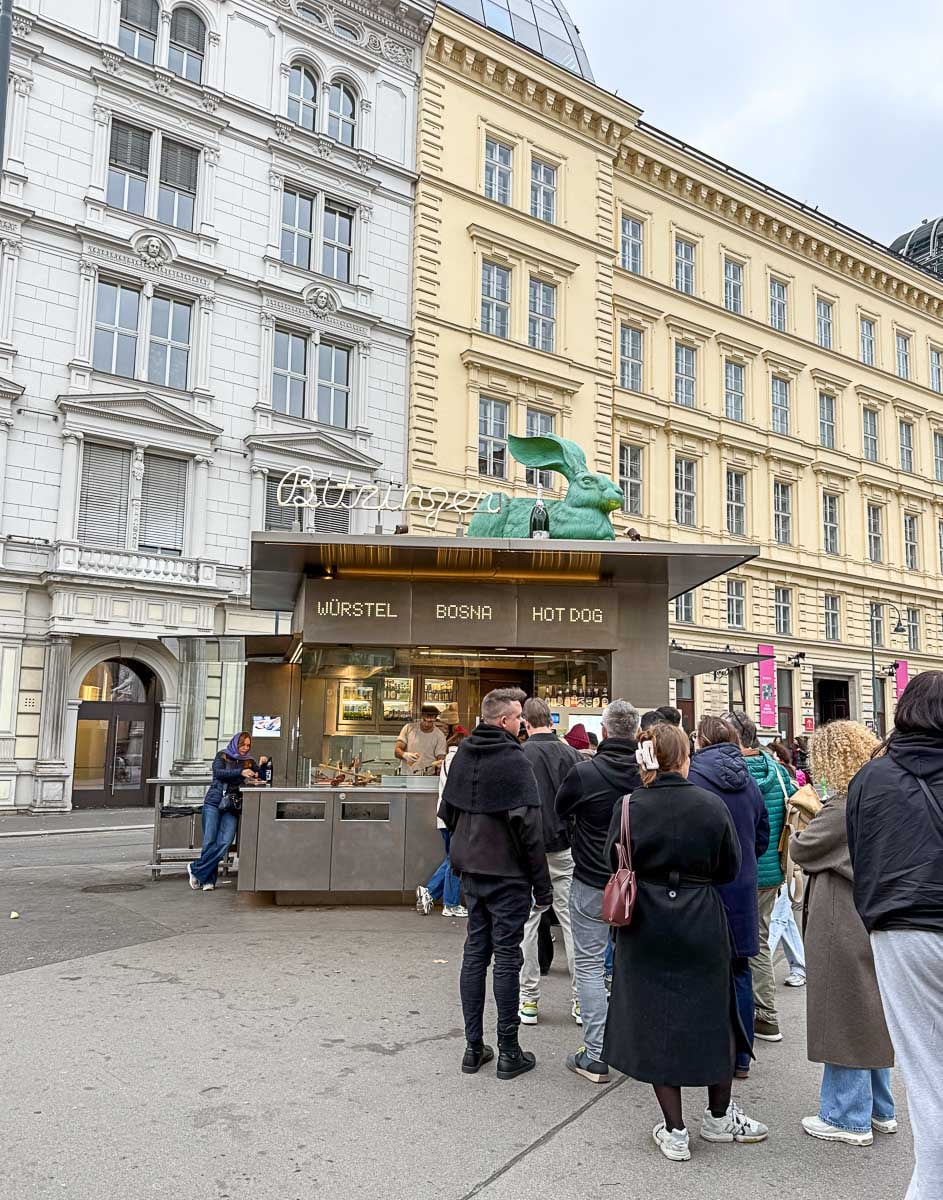
Workers on break, students, late-night crowds or opera-goers still dressed up - everyone gathers here. The classics are still there (Frankfurter and Käsekrainer), but many stands now also offer vegetarian and vegan options.
A stop at Trzesniewski
Next, my guide brings me to Trzesniewski, a well-known Viennese institution. Open for over 120 years, it serves small open-faced sandwiches with recipes that have barely changed over time.
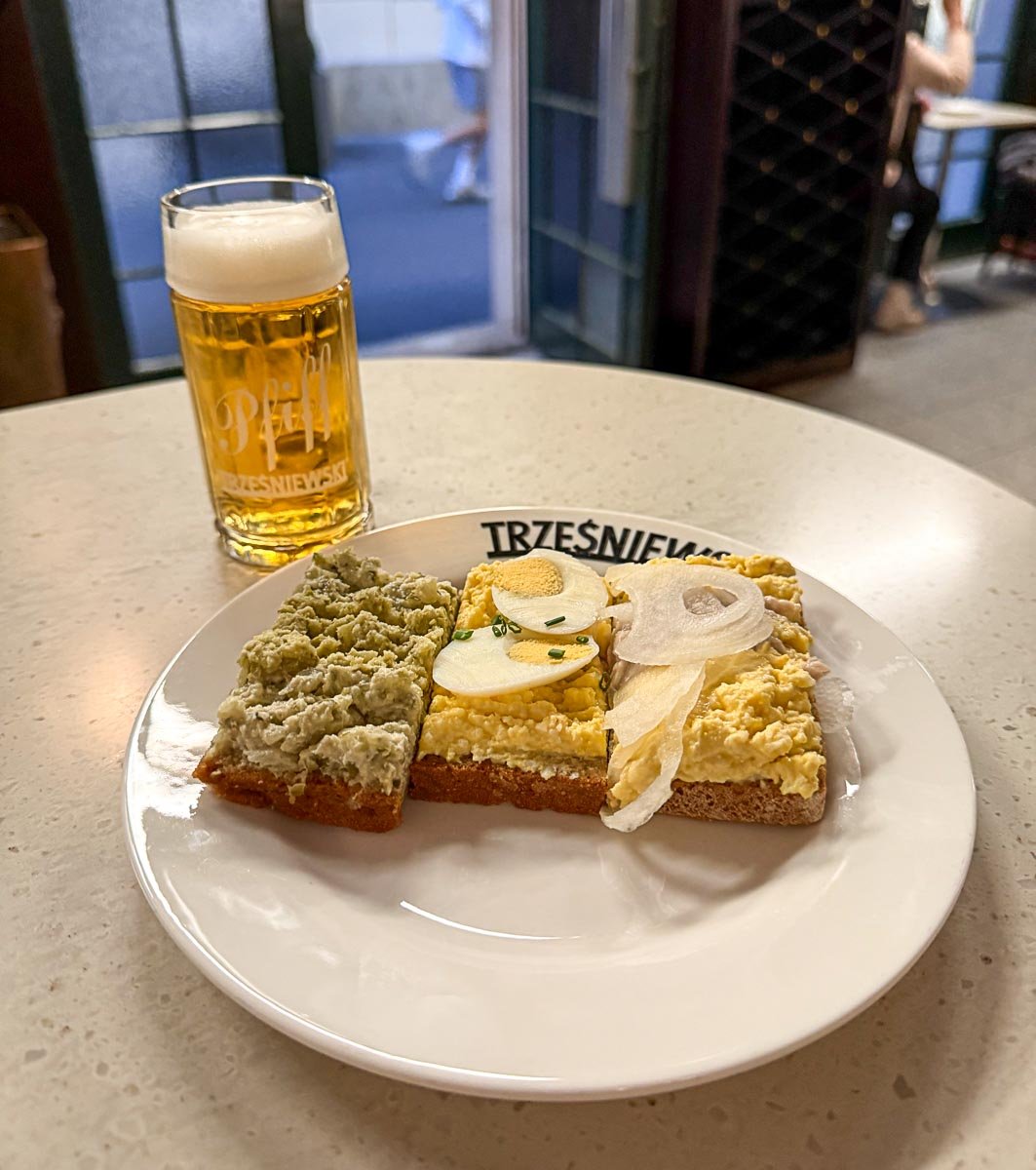
Photo: Marie-Noël Ouimet
Bacon and eggs, anchovies, smoked fish or onions - all paired with a Pfiff, a small beer, for a quick lunch on the go.
You will also like
Beisel, Taverns and Viennese Classics
You can't talk about Vienna without mentioning the Beisel - casual establishments somewhere between a café and a restaurant, serving simple food in a relaxed setting.
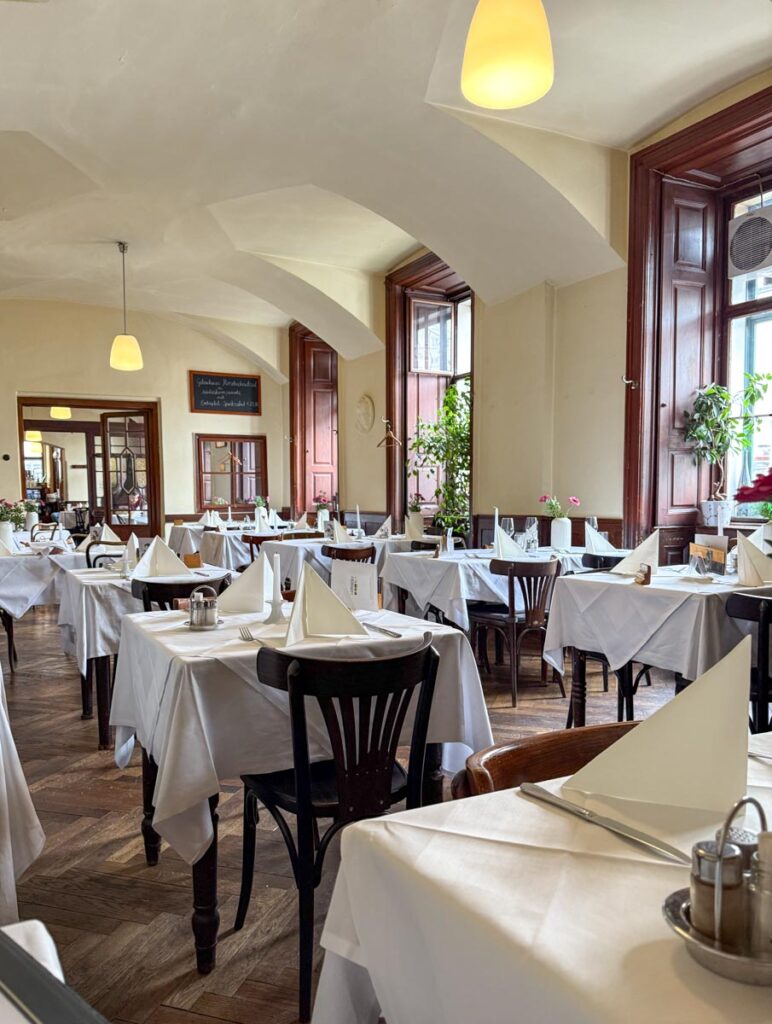
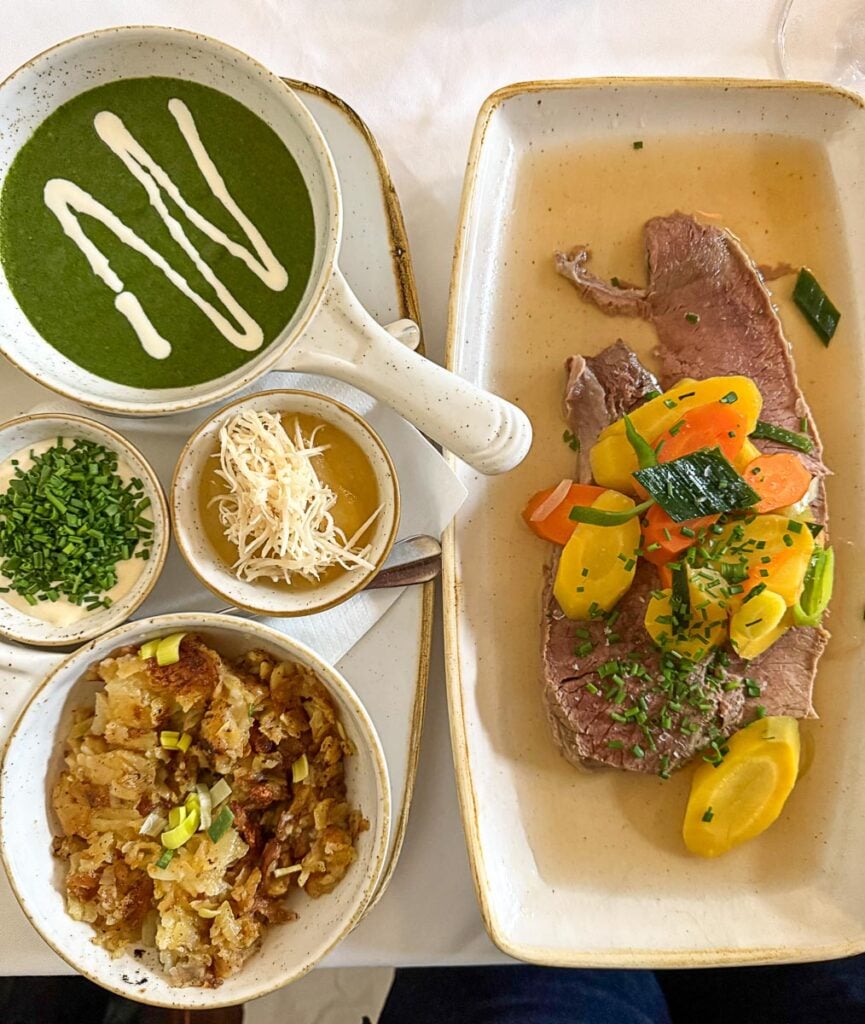
At Gmoakeller, founded in 1858, the tradition is very much alive. The meal starts with a clear beef broth served with Frittaten, thin strips of savory pancake.
Then comes Tafelspitz, long associated with Emperor Franz Joseph. Said to have been his favorite dish, it features boiled beef served with creamed spinach, horseradish apples and apple sauce.
Goulash, reflecting the Hungarian roots of Viennese cuisine, is another staple - a rich paprika-spiced stew found in many Beisel.
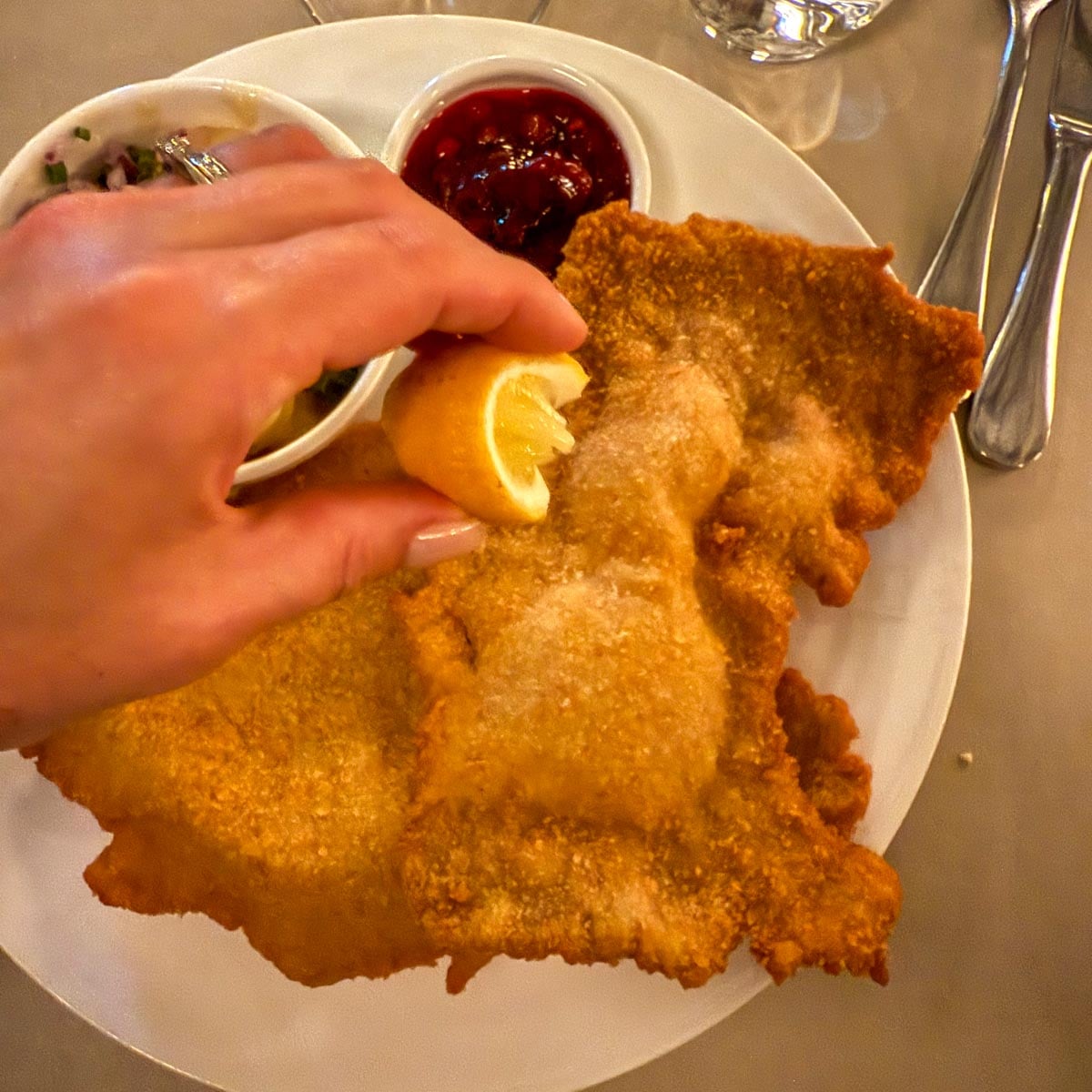
Photo: Marie-Noël Ouimet
The Wiener Schnitzel completes the picture. Traditionally made with veal, this breaded cutlet is served with potato salad and lemon. It remains a classic - and something locals often compare from one address to another.
Viennese Cafés: Taking Your Time
Coffee is an essential part of life in Vienna. In 2011, Viennese coffee house culture was recognized as part of UNESCO's intangible cultural heritage.
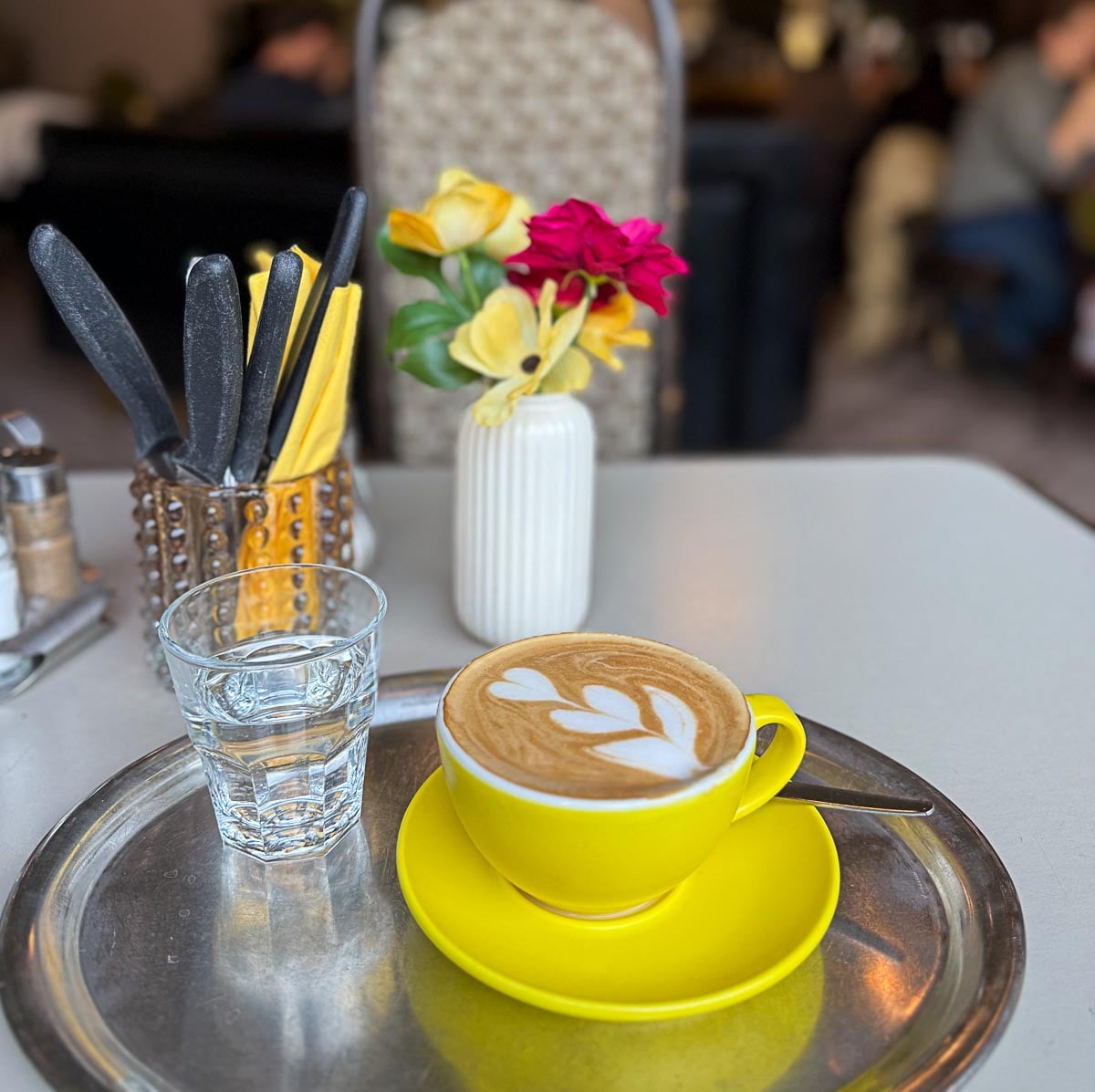
Photo: Marie-Noël Ouimet
From historic cafés to more contemporary spots, the experience remains the same. You sit down, no one rushes you, and coffee is almost always served with a glass of water on a tray.
Among the classics, the Melange is one of the most common orders - somewhere between an espresso and a latte, topped with warm milk and light foam.
Cakes, Strudel and Serious Debates
In Vienna, pastries are taken seriously - and often debated. Where can you find the best strudel? Which café serves the most authentic version of a classic dessert? Answers vary depending on habits, neighborhoods and personal loyalties.
The most famous rivalry is between Demel and Café Sacher over the Sachertorte - a chocolate cake layered with apricot jam and covered in a dense glaze.
At the Hotel Imperial, another signature dessert is served: the Imperial Torte, created in 1873 for Emperor Franz Joseph. Made with almond biscuit, cocoa cream and marzipan, its recipe remains a closely guarded secret and is still handmade today.
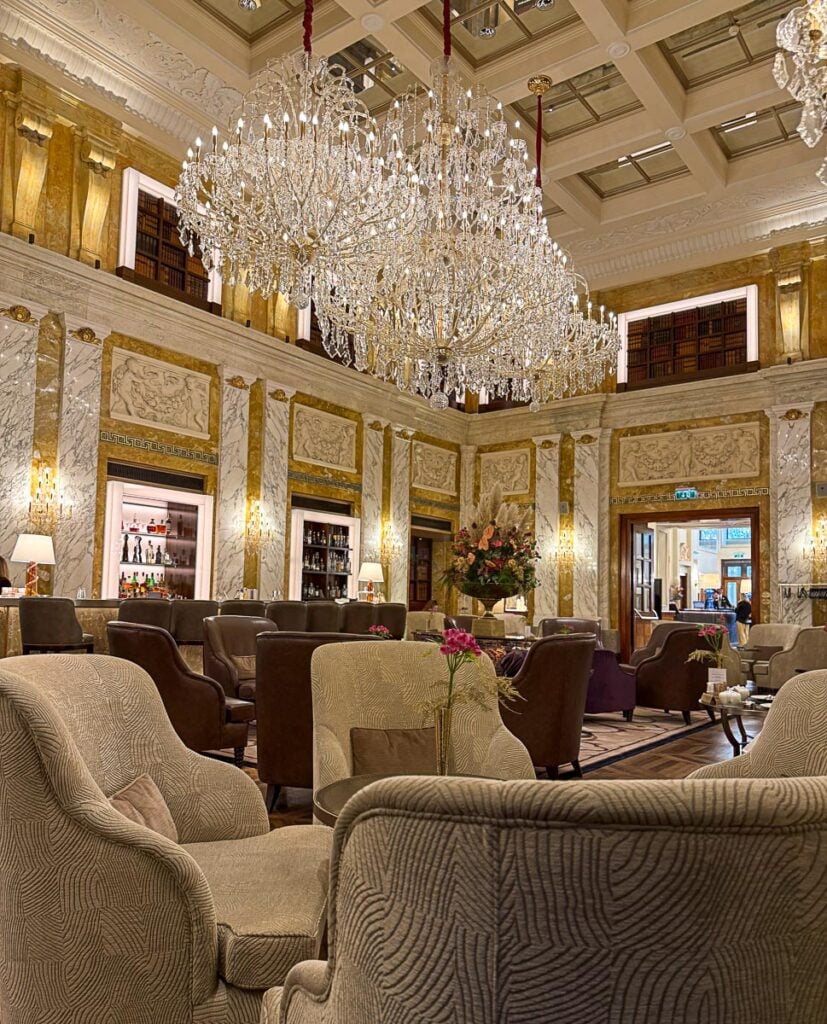
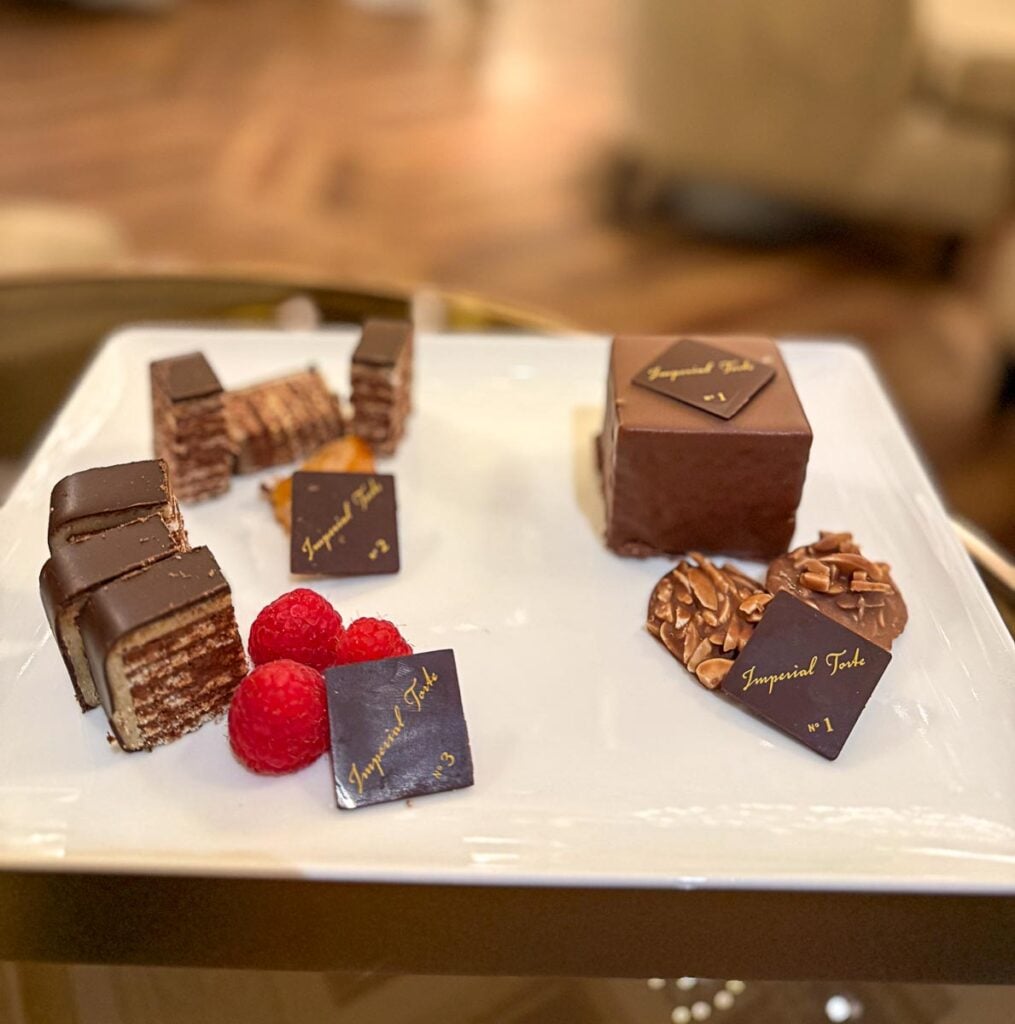
These cakes are also sold as elegant souvenirs, often packaged in refined boxes that extend the experience beyond the trip.
Vollpension: Tradition in Practice
At Vollpension, culinary tradition takes on a very tangible form. Cakes are baked by grandmothers and grandfathers using family recipes.
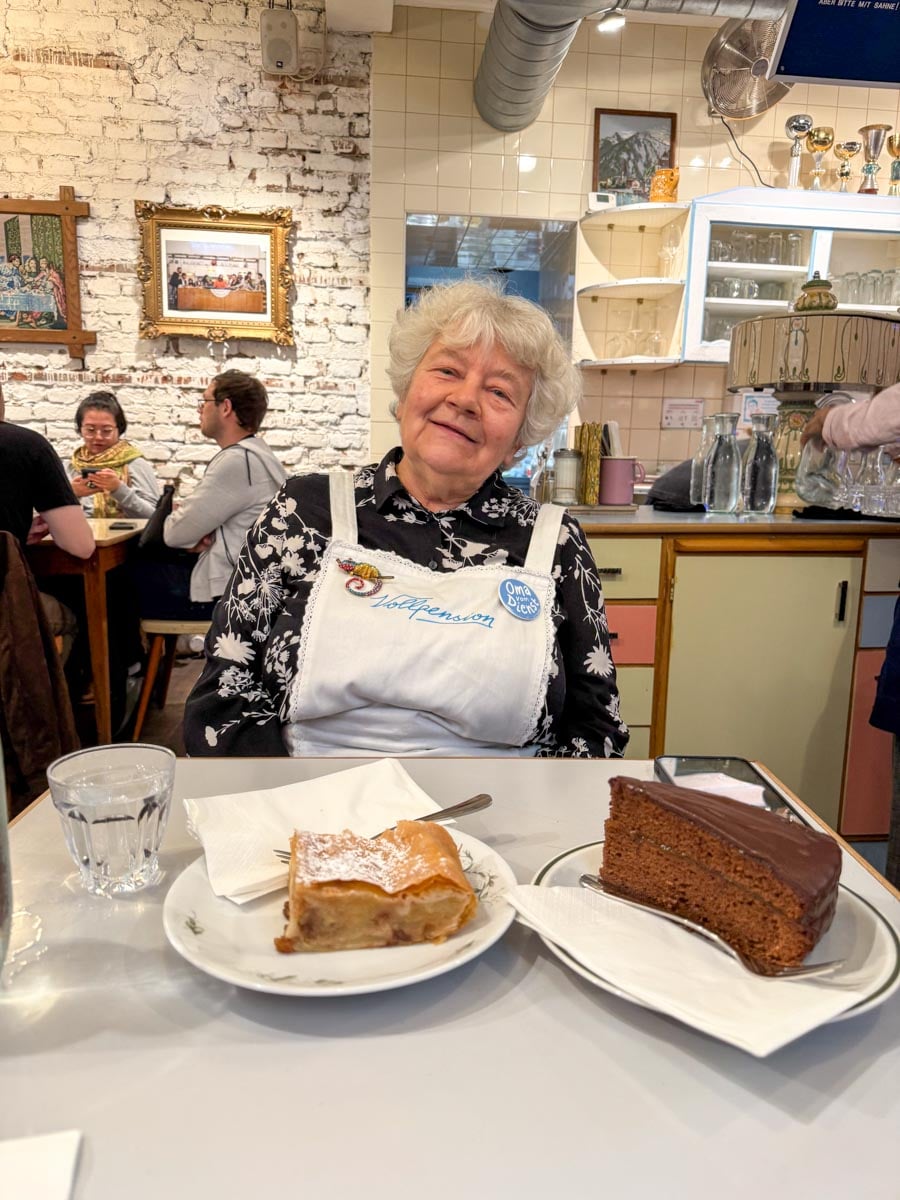
Photo: Marie-Noël Ouimet
Locals and visitors alike come not just for the food, but for the atmosphere.
The menu shifts slightly from day to day depending on who is in the kitchen, reflecting a tradition that continues to evolve.
Getting Hands-On with a Cooking Class
This tradition is also passed on through practice. I learned how to make Apfelstrudel during a workshop with Nabiel's Cooking Class.
The focus is on technique: stretching the dough until nearly transparent and respecting resting times.
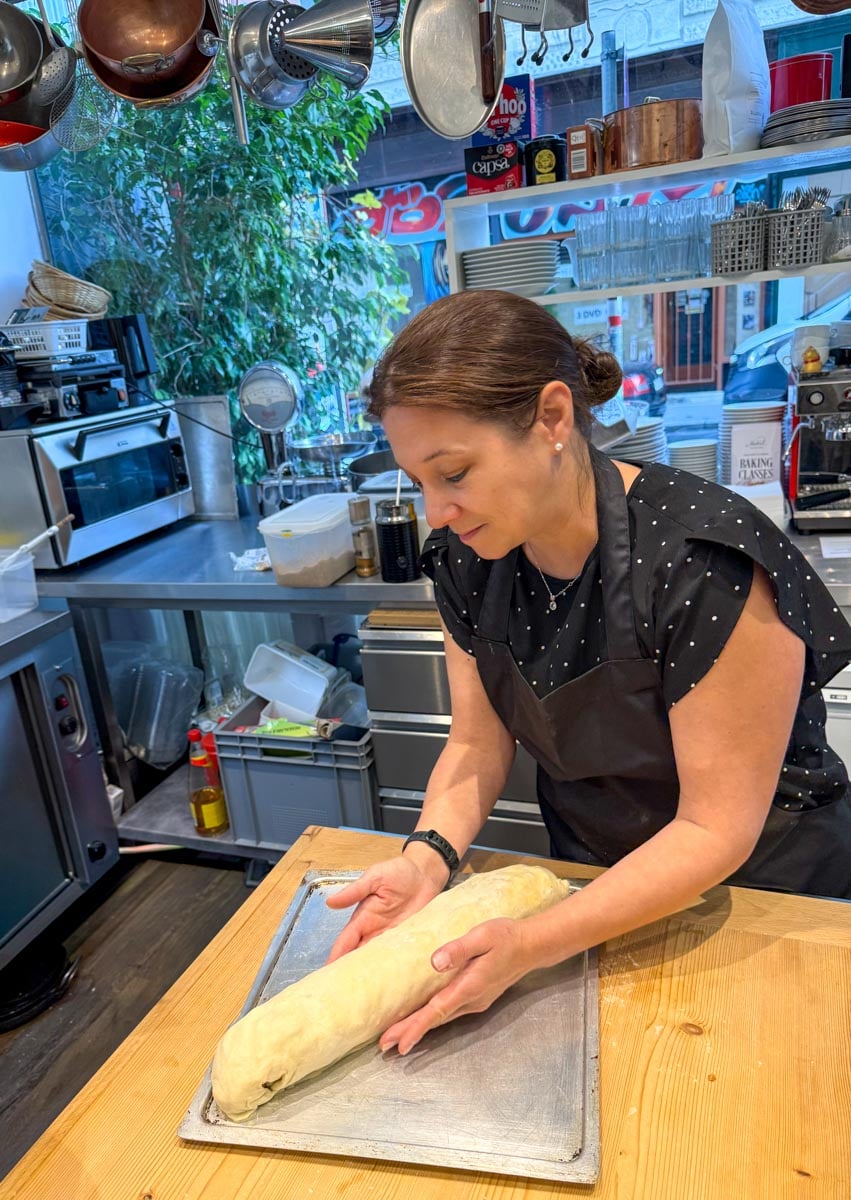
Even with a classic like strudel, interpretations vary. Should breadcrumbs be added to the filling? There's no single answer.
The format is straightforward: a few hours in a small group, repeated gestures, and at the end, a freshly baked dessert. Other workshops focus on classics like schnitzel or Sachertorte, following the same hands-on approach.
Vienna, a Wine City
Vienna is the only capital in the world with vineyards within its city limits - a distinctive feature that shapes its food culture.
In the Heuriger, traditional taverns where producers serve their own wine, locals drink regional wines alongside simple dishes. This tradition is also recognized by UNESCO.
Gemischter Satz, made from different grape varieties planted and harvested together, remains the most emblematic style. Once associated mainly with local consumption, it is now found on many restaurant wine lists.
The city has around 600 hectares of vineyards and nearly 170 wineries, mostly planted with white grape varieties such as Grüner Veltliner and Riesling.
Planning your stay in Vienna
Getting Around
Vienna's city center is easy to explore on foot. For longer distances, public transportation (subway, trams and buses) is efficient, reliable and affordable.
From the airport, the City Airport Train (CAT) provides a quick connection to the city center.
Where to Stay
Located in the 1st district, the Hotel Palais Mailberger Hof is a convenient base for exploring Vienna on foot while offering a quiet setting.
Where to Eat
See our best places to eat in Vienna
Experiences to Consider
Cet article fait suite à l'invitation de Vienna Tourist Board qui n'a pas eu droit de regard sur le contenu.
This article contains affiliate links, which means that we may receive a small commission if a purchase is made through these links at no additional cost to you. This site participates in affiliate advertising programs, including the Amazon Associates program, which allows you to earn money by linking to Amazon, its associated sites and others.

Marie-Noël Ouimet is a writer and content creator specializing in gastronomy, wine, and travel. She is the founder of the digital magazine Urbaine City, where for over 10 years she has been highlighting the pleasures of the table and the destinations that bring them to life. She also holds the WSET Level 3 certification in wines and spirits.