There's often a bottle of ice cider sitting in the fridge. Received as a gift, saved for a "special occasion"… and eventually forgotten. What if you used it differently?
Because ice cider isn't just for dessert. When used well, it becomes a surprisingly versatile ingredient, adding both richness and freshness while keeping a nice balance.
That's exactly what this recipe explores, with a simple cocktail where ice cider meets the bitterness of Campari and the lightness of sparkling cider.
Quebec Ice Cider: A Unique Product Worth Rediscovering
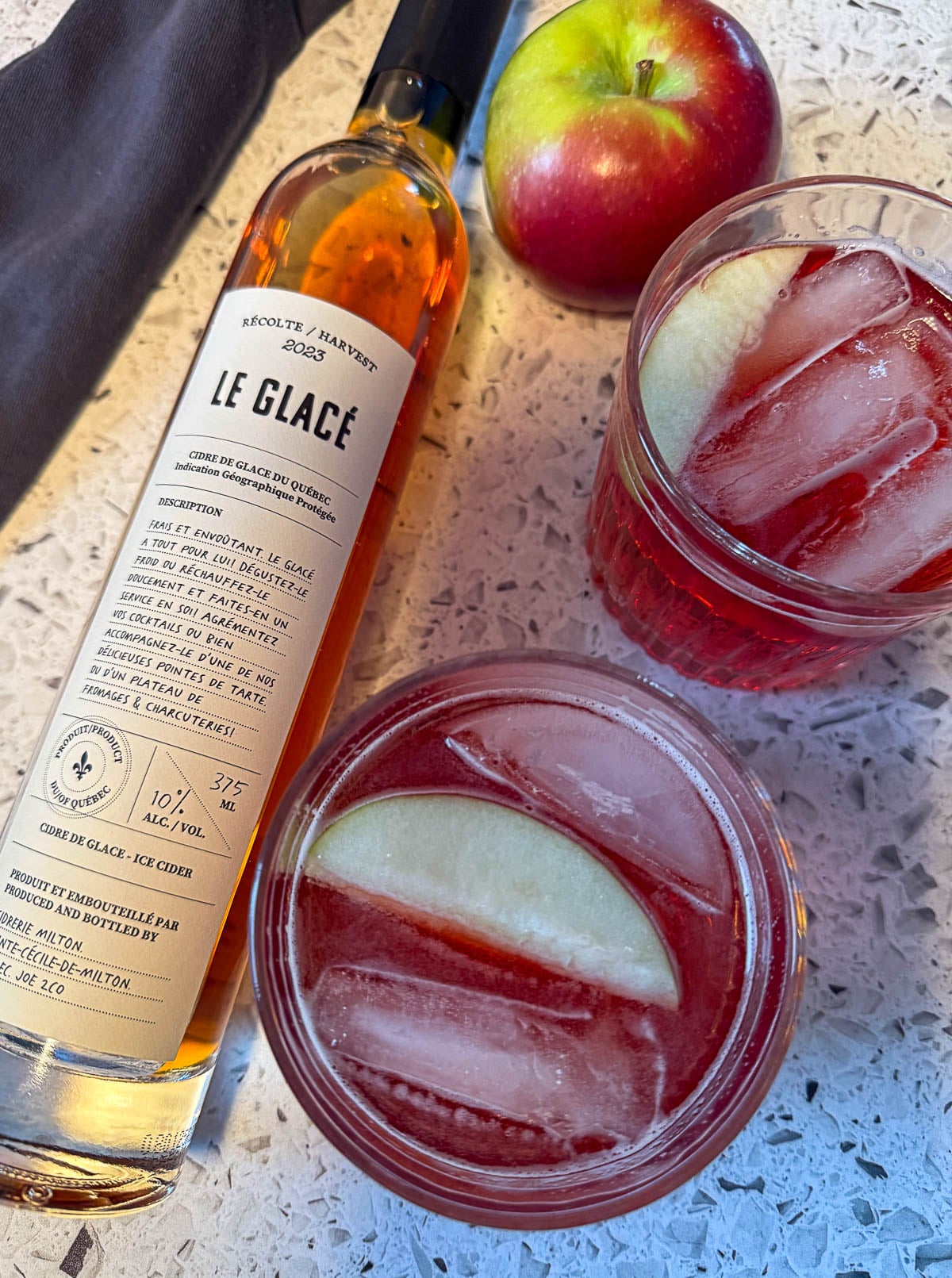
A signature product of Quebec, ice cider stands out for its balance between concentration and freshness.
You'll typically find notes of baked apple, honey and sometimes tropical fruit. But what really defines it is its bright acidity.
Unlike heavier dessert wines, it keeps a lively edge that makes it much easier to pair with food.
And that's where it becomes most interesting.
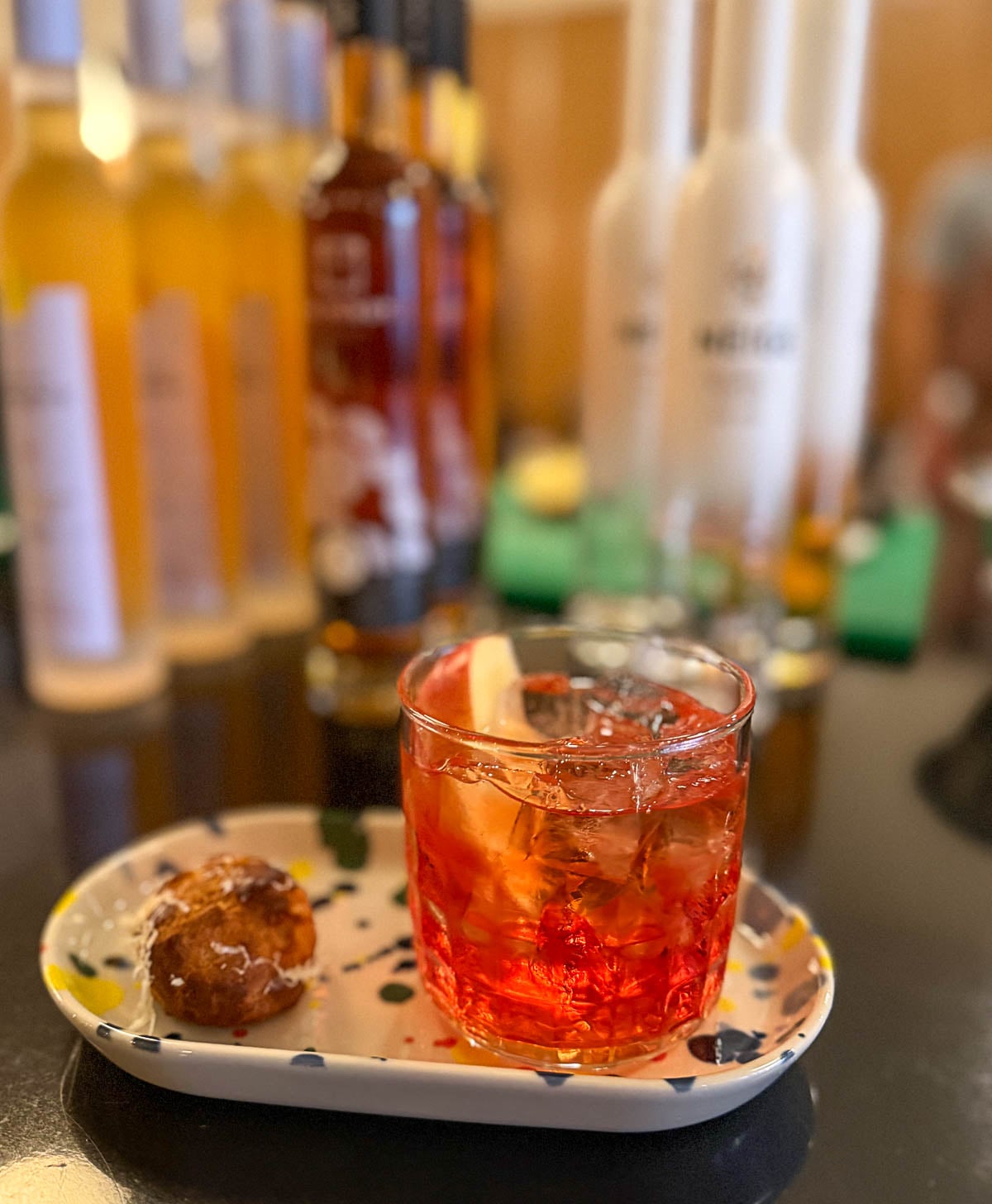
Photo: Marie-Noël Ouimet
It pairs just as well with a cheese board as it does with savory dishes like duck or foie gras. At aperitif or brunch, it works beautifully with rillettes, charcuterie or bites like gougères.
How Ice Cider Is Made
What makes ice cider unique is Quebec's cold climate.
Apples are harvested late in the season and then exposed to natural freezing temperatures. As the water inside the fruit freezes, sugars become concentrated.
When pressed, only a small amount of highly concentrated juice is extracted. This juice is then slowly fermented, resulting in a cider that is sweet, complex and well balanced.
Two main methods are used to achieve this natural concentration:
- Cryoconcentration: The most common method. Apples are harvested at full maturity, pressed, and the juice is exposed to cold temperatures. Freeze-thaw cycles gradually concentrate the sugars.
- Cryoextraction: More demanding. Apples are left to freeze naturally before pressing, either on the tree or after harvest. They are then pressed while still frozen, concentrating the sugars directly within the fruit.
Look for terms like "cryoextraction" or "winter harvest" on the label.
IGP: A Reliable Quality Marker
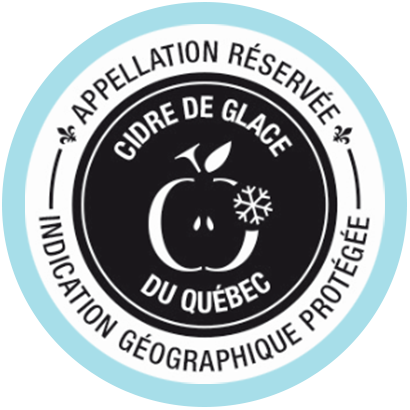
The Quebec Ice Cider PGI (Protected Geographical Indication) ensures strict production standards:
- late-harvest apples grown in Quebec
- sugars concentrated only through natural cold
- fermentation of pure apple juice
- quality control through analysis and tasting
Key facts:
- alcohol: 9% to 13%
- residual sugar: minimum 140 g/L
To identify authentic Quebec ice cider, look for the PGI logo on the bottle.
Producers to Know
Among IGP-certified ice ciders:
- Domaine Lafrance (available at the SAQ)
- Milton (at the cidery)
- Minot (at the cidery)
- Neige (SAQ)
- Pinacle (SAQ)
A Simple Way to Enjoy It: In a Cocktail
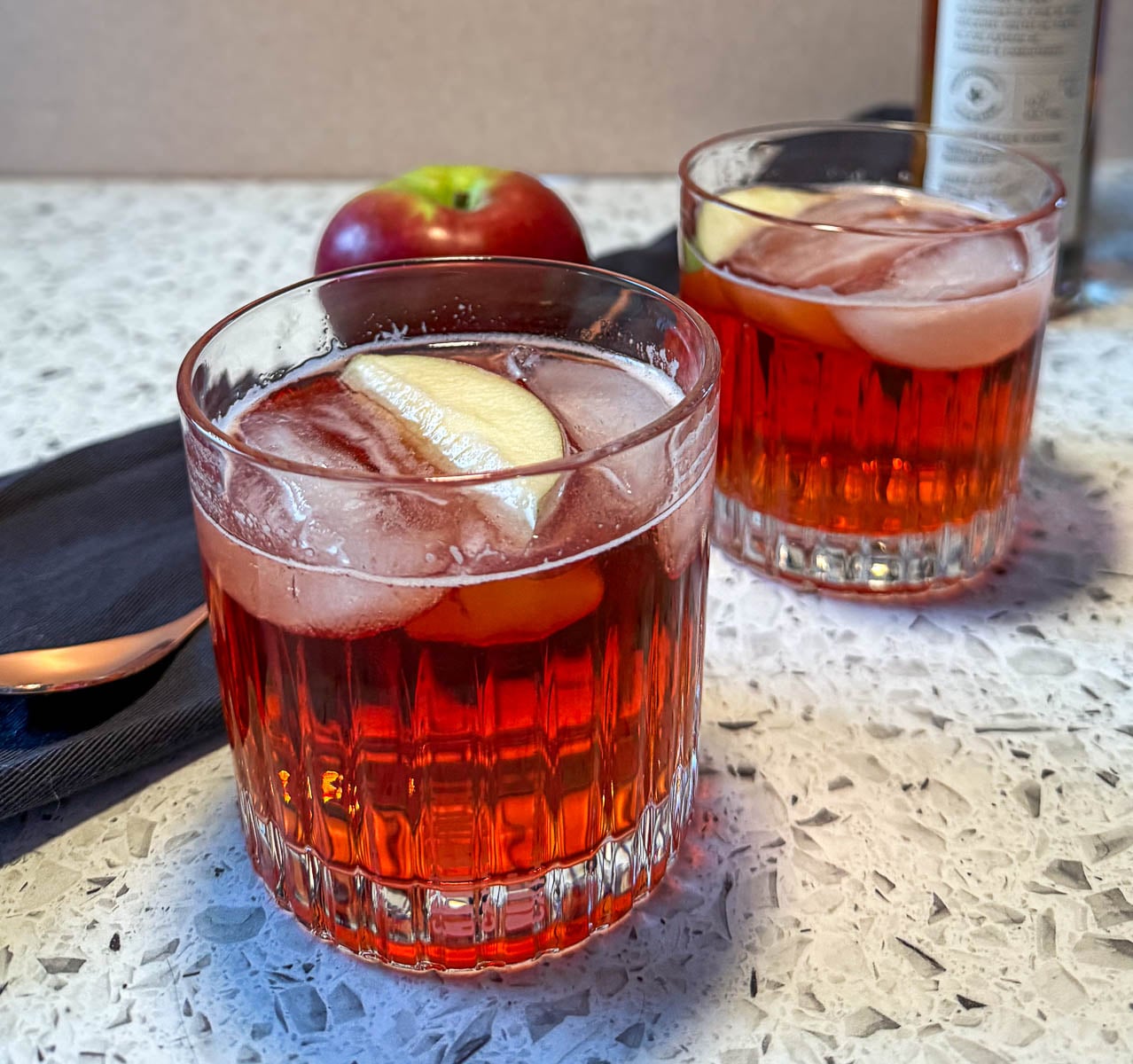
This is where ice cider really shines. Thanks to its natural balance of sweetness and acidity, it works exceptionally well in cocktails. It adds body without making drinks feel heavy.
In this recipe, it's paired with Campari, for a structured bitterness and sparkling cider, for freshness and bubbles. The result is a well-balanced cocktail with a light bitterness and a refreshing finish.
You will also like
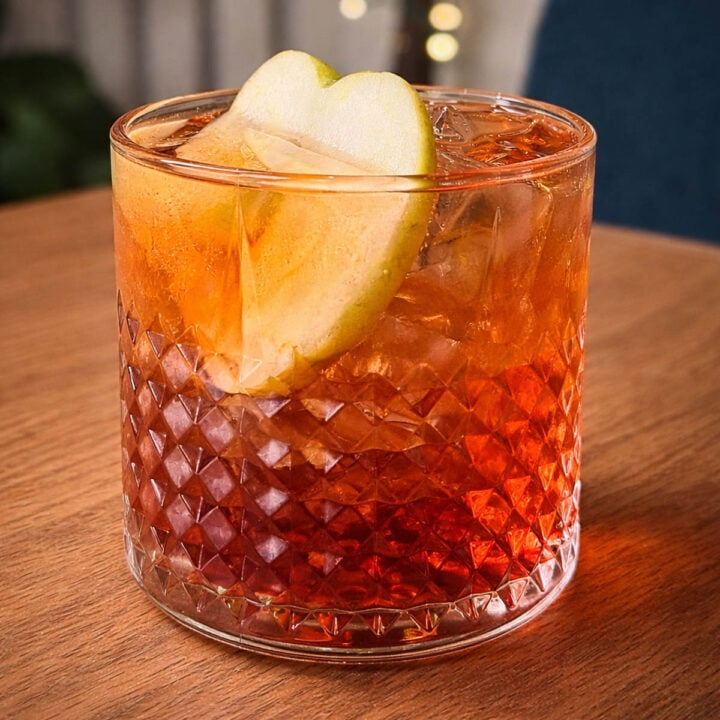
Pomme d'api
Ingredients
- 2 oz ice cider
- 0.75 oz Campari
- 3 oz sparkling cider
- Garnish: apple slice, ice
Instructions
- In an Old Fashioned glass, pour the Campari and ice cider.
- Fill the glass with ice.
- Top with sparkling cider.
- Gently stir.
- Garnish with apple slices.
Notes
Recipe by P-O Trempe (Made With Love)
This article contains affiliate links, which means that we may receive a small commission if a purchase is made through these links at no additional cost to you. This site participates in affiliate advertising programs, including the Amazon Associates program, which allows you to earn money by linking to Amazon, its associated sites and others.

Marie-Noël Ouimet is a writer and content creator specializing in gastronomy, wine, and travel. She is the founder of the digital magazine Urbaine City, where for over 10 years she has been highlighting the pleasures of the table and the destinations that bring them to life. She also holds the WSET Level 3 certification in wines and spirits.